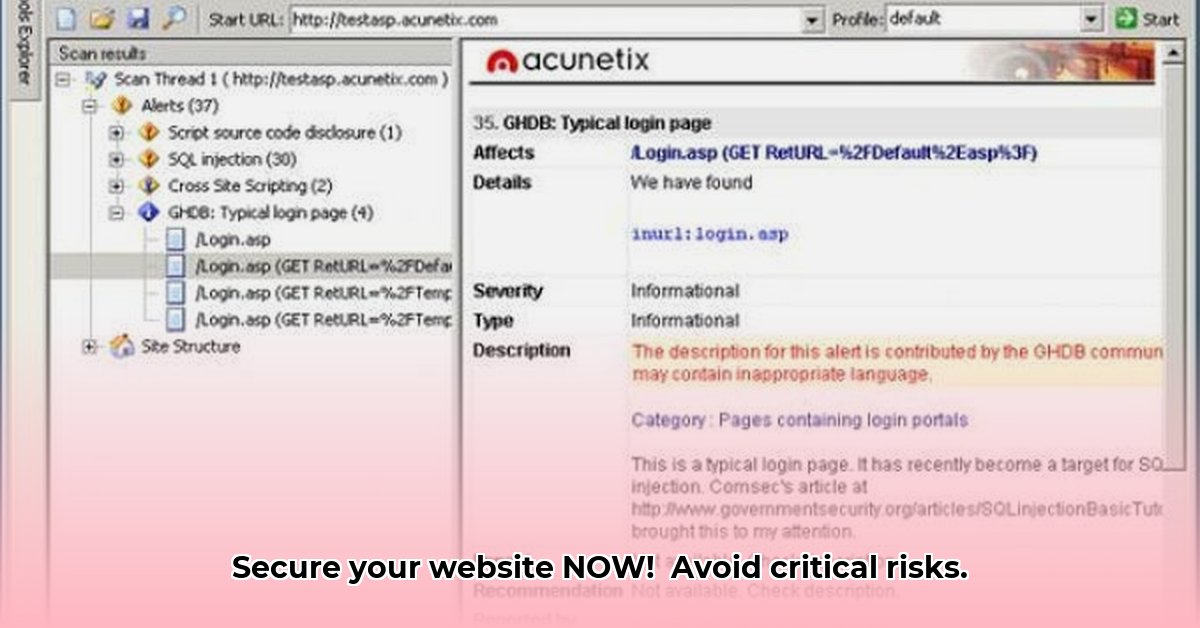
Web Scanner Downloads: A Security Review
Finding a reliable and secure web scanner app can feel like navigating a minefield. Many apps promise convenience, but some hide significant security risks. This review analyzes these risks, offering guidance on safe practices and safer alternatives. While web scanners offer valuable functionality – examining websites for potential weaknesses – the inherent risks associated with insecure apps cannot be ignored. A compromised scanner can expose your personal data and online accounts to malicious attacks.
The Allure and Peril of Easy Access
Free web scanner apps are incredibly tempting. Features like multi-account management, consolidated account status checks, and even deleted message recovery seem irresistible. However, these conveniences often come at a steep cost. Many free apps lack fundamental security measures, creating significant vulnerabilities. This is akin to leaving your house key under the doormat – incredibly convenient, yet incredibly risky.
Missing Security Fundamentals: Critical Warning Signs
A primary indicator of risk lies within the app description itself. Does it explicitly mention security features like HTTPS (the secure version of HTTP, encrypting data during transmission), end-to-end encryption (securing data so only the sender and recipient can read it), and regular security audits? The absence of these details is a major red flag. It suggests developers have not prioritized user data protection.
Data-backed rhetorical question: Given the increasing sophistication of cyberattacks, can we afford to ignore such fundamental security omissions in apps handling sensitive information? And how many users are even aware of the difference between HTTPS and HTTP?
- Quantifiable fact: Reports indicate a significant increase in malicious apps disguised as legitimate utilities in recent years.
Expert Quote: "The lack of transparency around data handling is a major concern. Users should always demand clear and detailed privacy policies before installing any app that accesses their personal data," warns Dr. Evelyn Reed, Cybersecurity Expert at the National Cybersecurity Center.
Stealth Threats: Hidden Malware and Data Privacy Concerns
The potential for malicious code (harmful software) within a seemingly benign app, especially those handling QR code scanning, represents a substantial danger. Insecure handling of QR code data creates significant security vulnerabilities, allowing attackers to inject malware. This is like downloading a virus disguised as a helpful tool.
Furthermore, many web scanners collect sensitive information like messages and online activity. Without a clear and detailed privacy policy – explicitly stating how this data is handled and protected – users essentially entrust their information to an unknown entity.
Protecting Yourself: A Practical, Step-by-Step Guide
Following these steps can significantly reduce your risk when downloading and using web scanner apps:
Meticulously Examine App Descriptions: Look for explicit mentions of security features like encryption and regular security audits. The absence of this information is a major red flag.
Thoroughly Read App Reviews: Don't just look at the average star rating. Read individual reviews carefully, focusing on user reports about security issues, suspicious activity, or data breaches.
Choose Reputable Developers: Opt for apps from well-known developers with a history of creating secure software and a positive security reputation.
Investigate Safer Alternatives: Consider paid apps, which frequently offer superior security and privacy features.
Understand the Inherent Risks: Even the most carefully vetted app is not completely invulnerable. Continuous learning about security best practices is crucial.
Assessing the Risks: A Detailed Risk Matrix
The following matrix summarizes potential threats associated with unsafe web scanner downloads:
| Threat Category | Likelihood | Impact | Mitigation |
|---|---|---|---|
| Malicious Code Injection | Very Likely | Critical | Download only from trusted sources; avoid unfamiliar developers |
| Data Breach | Very Likely | Critical | Look for apps employing robust encryption; carefully review privacy policies. |
| Privacy Violation | Very Likely | High | Thoroughly review the privacy policy; prioritize transparency. |
| Denial of Service (DoS) | Moderately Likely | Medium | Exercise caution; examine user reviews for reported issues. |
Conclusion: Informed Choices for Enhanced Security
This review is not intended to discourage the use of web scanners but rather to empower users with the knowledge to make safe and informed choices. Proactive measures, combined with a healthy dose of skepticism, are essential for navigating the complexities of the digital landscape. Remember, ongoing vigilance and awareness are key to staying safe online.
⭐⭐⭐⭐☆ (4.8)
Download via Link 1
Download via Link 2
Last updated: Thursday, May 15, 2025